5 Tips to Better Communicate With Your Stakeholders
Mapping, cadence, format, level of detail, transparency on trade-offs: 5 concrete tips to keep your stakeholders aligned.
By the RoadmapHero team · Updated on · 3 min read
Key takeaways
- Communicating is not planning: stakeholders need a clear narrative, readable horizons such as Now / Next / Later, and a level of detail tailored to their role.
- Map stakeholders on a power × interest matrix, redo it every 6 months, then set a cadence and a format specific to each audience.
- A sponsor should be able to read your update in 2 minutes, so use an inverted pyramid: conclusion first, details next and appendix last.
- Communicate the noes as much as the yeses by stating, for each major trade-off, the problem, options, decision criteria, decision owner and review date.
Stakeholder communication is the hidden craft of Product and Project Managers. Done well, it prevents 80% of conflicts. Done badly, every steerco becomes a courtroom.
Before the tips, a useful distinction: communicating is not planning. Your teams steer internally with plans, capacity and precise dependencies. Stakeholders, on the other hand, need a clear narrative, readable horizons (e.g. Now / Next / Later) and a level of detail tailored to their role. This article explains how to build that shareable narrative without duplicating the data.
1. Map your stakeholders
List your stakeholders and place them on a power × interest matrix:
High power + high interest: actively manage (1:1 reviews).
High power + low interest: keep informed (targeted summaries).
Low power + high interest: involve (tests, betas).
Low power + low interest: monitor.
Re-do this mapping every 6 months. Power dynamics shift.
2. Set a clear cadence
No rhythm yields two failure modes: too much noise or too much silence. Set a per-audience cadence:
Leadership / sponsors: monthly note + quarterly steerco.
Sales / marketing: bi-weekly digest, monthly demo.
Support / ops: release announcements, incident reviews.
Customers / partners: public roadmap, changelog.
3. Tailor the format
Sponsors: 1 slide, 3 numbers, 1 expected decision.
Product team: detailed roadmap, opportunities, risks.
Sales: release roadmap, talking points.
Customers: clean changelog, no jargon.
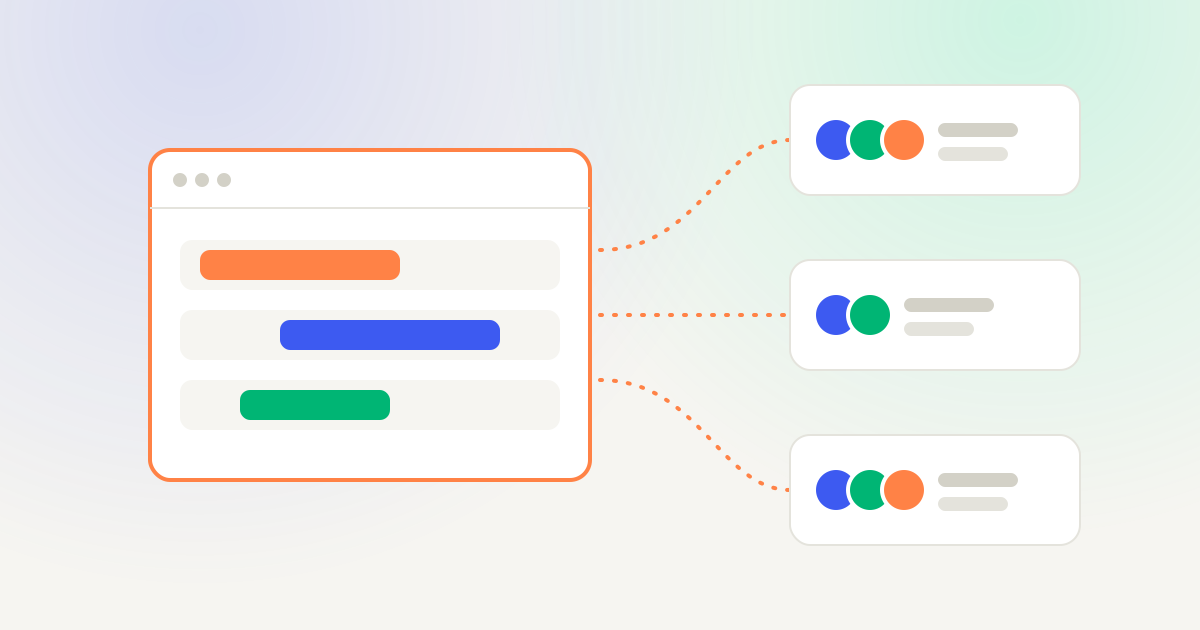
With RoadmapHero you generate several shareable views from the same roadmap, each tailored to an audience, without duplicating data.
4. Dose the level of detail
Too much detail drowns the message. Too little fuels distrust. Practical rule:
A sponsor should read your update in 2 minutes.
A middle manager should be able to dive in within 5–10 minutes.
An operator should see everything if asked.
Inverted pyramid: conclusion first, details next, appendix last.
5. Be transparent on trade-offs
The golden rule: communicate the noes as much as the yeses. A sponsor accepts an explained no better than a lukewarm yes.
For each major trade-off:
The problem.
The options considered.
The decision criteria (link to OKRs, scoring).
The decision and its owner.
The review date.
To tool up the prioritization behind your trade-offs, see how to prioritize your backlog.
Common mistakes
Aligning everyone via email: useful to trace, terrible to align.
One roadmap for every audience: unreadable for everyone.
Last-minute surprises: a well-prepared change lands a thousand times better than a brutal one.
Defensive tone: be firm on methods, open on conclusions.
Confusing inform and align: sending a note doesn't create alignment.
Communication plan template
Audience | Channel | Cadence | Format | Owner |
|---|---|---|---|---|
Exec / leadership | Slide deck + steerco | Monthly | 1 page, 3 KPIs, milestones | Head of Product |
Product squads | Notion / RoadmapHero | Weekly | Roadmap + sprint review | PM |
Sales | Slack digest | Bi-weekly | Releases + talking points | PMM |
Support | Release notes | On every release | Bullet list + screenshots | PM |
Customers | Public page | Continuous | Roadmap + changelog | PM |
Try RoadmapHero to generate these views automatically from a single source of truth.
Frequently asked questions
Who are a product's stakeholders?
Anyone affected by the product or contributing to its success: leadership, sales, marketing, support, ops, finance, compliance, customers, partners — and of course product, engineering and design.
Should I tell every stakeholder the same thing?
No. The message should be coherent, but format, level of detail and frequency must match each audience. Filtered shareable views avoid duplication.
How do I handle a difficult stakeholder?
Listen for real, reframe their need as a problem, and show how it fits (or doesn't) on the roadmap with shared criteria. The method defuses 80% of conflicts.
What's the right communication rhythm?
Weekly for delivery, monthly for roadmap trade-offs, quarterly for strategic reviews. Adjust based on project criticality.