Leadership & strategy execution
What is a PMO? Roles, types and how to set one up in 90 days
What is a PMO? The 3 types (supportive, controlling, directive), core roles and responsibilities, PMO vs project manager, and a 90-day plan to set one up.
By the RoadmapHero team · Updated on · 9 min read

Key takeaways
- A PMO (project management office) is the function that standardizes how projects are run, gives leadership one reliable view of the portfolio, and prepares trade-off decisions.
- There are three types of PMO: supportive (templates and coaching), controlling (enforced standards and reporting) and directive (the PMO manages projects directly).
- A project manager owns the success of one project; a PMO owns the consistency, visibility and resourcing of all projects together.
- A PMO can prove its value in 90 days: inventory and diagnosis, then rules and rhythms, then a first consolidated view and a first real portfolio decision.
A PMO (project management office) is the team or function that makes an organization's projects visible and governable: it sets common practices, consolidates status across the portfolio, tracks capacity, and prepares the decisions leadership needs to make. A good PMO exists to improve decisions, not to produce reports. Depending on how much authority it holds, a PMO is supportive, controlling or directive.
Most companies create a PMO when projects start to slip out of sight: too much work in flight, the same people booked on three projects, delays that surface in the steering meeting instead of on the ground. A PMO can fix that, or it can add a layer of status requests on top of the problem. This guide covers the three PMO models, the roles and responsibilities that matter, how a PMO differs from a project manager, and a practical plan to set one up in 90 days.
What is a PMO?
"PMO" refers to either a unit (the office, which can be a single person) or a role (the PMO analyst or lead supporting a program director). Either way, the job is the same: help the organization run the right projects, run them consistently, and know where they really stand.
PMOs come in three scopes:
Project or program PMO: supports one large project or program, such as an ERP migration or a transformation, with an integrated plan, risk tracking and governance support.
Portfolio PMO: covers every project in a department (IT, operations, product) and helps leadership choose between them.
Enterprise PMO (EPMO), sometimes called a strategy office or transformation office: connects the portfolio to company strategy, making sure each project serves a company objective and that funding follows priorities.
The wider the scope, the more the PMO talks about strategy and the less about schedules. An enterprise PMO that spends its week chasing project managers for status updates is doing the wrong job.
The 3 types of PMO: supportive, controlling, directive
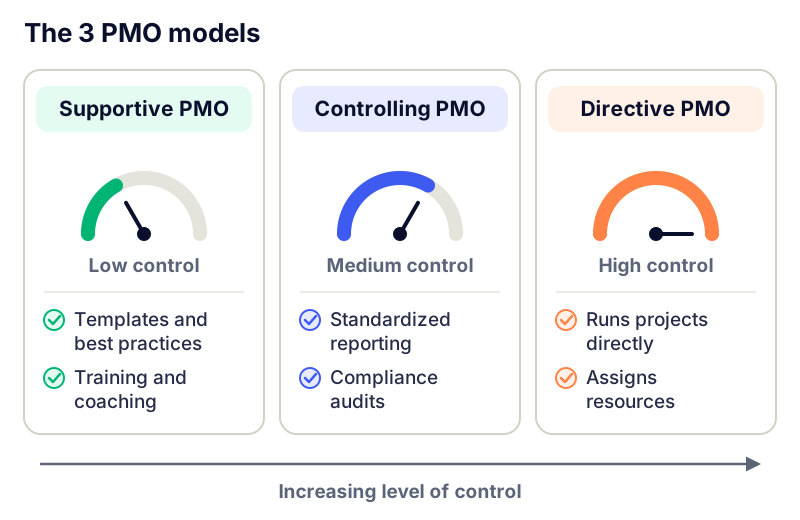
The most common way to classify PMOs is by the level of control they hold over projects. It is not a maturity ladder where directive is best: the right model depends on your culture, your portfolio and what leadership expects.
PMO type | Level of control | Typical responsibilities | Best fit when |
|---|---|---|---|
Supportive | Low | Templates, tools, coaching, training project managers | Autonomous teams, informal culture, need to share good practices |
Controlling | Medium | Mandatory standards and reporting, stage-gate reviews, risk oversight | Dense portfolio, leadership needs a reliable consolidated view |
Directive | High | Manages projects directly, assigns project managers, allocates resources | Critical programs, high exposure, project managers report to the PMO |
Supportive PMO
A supportive PMO acts as a resource center. It provides templates (project charter, plan, risk log), runs a community of practice and onboards new project managers. Its influence comes from being useful, because nobody is required to follow its advice. It is a sensible starting point when project culture is young, but it rarely gives leadership a portfolio view it can trust.
Controlling PMO
A controlling PMO sets rules and checks compliance: a standard status format, stage gates, risk reviews, governance steps. It is the most common model in large organizations. Its main risk is drifting into control for its own sake, which is how the "reporting factory" described below is born.
Directive PMO
A directive PMO runs projects itself: project managers report to it, it assigns people and it is accountable for portfolio delivery. The model gives strong execution power but concentrates responsibility, and business units can disengage ("the PMO owns it"). It makes sense for critical programs or organizations where project delivery is the core business.
PMO roles and responsibilities
Whatever its type, a PMO usually combines six responsibilities. Not all of them need to be live on day one.
Set the rules of the game: project lifecycle, criteria for entering the portfolio, governance and approval levels. Our project management guide covers the lifecycle these rules frame.
Provide one view of the portfolio: a single list of projects with health, milestones and budget burn. This is the foundation of project portfolio management.
Prepare trade-offs: which projects to start, delay or stop, on what criteria and with what consequences. The PMO prepares the decision; leadership makes it.
Track capacity: load versus capacity by team, overloaded people, resource conflicts between projects. The principles of capacity planning apply to projects too.
Run governance: agendas, pre-reads and decision logs, especially for the project steering committee.
Improve practices: lessons learned, training and continuous improvement of methods and tools.
In the first quarter, focus on responsibilities 2 and 3. A reliable portfolio view and one well-prepared decision earn more credibility with executives than a complete methodology handbook.
PMO vs project manager: what's the difference?
The two roles get confused, especially when one person wears both hats. The difference is what each one is accountable for:
A project manager is accountable for one project: delivering the expected outcome within the agreed time, budget and scope. They plan, coordinate the team, manage project risks and report to the sponsor.
A PMO is accountable for the whole: consistent methods, portfolio visibility, resource conflicts, cross-project dependencies and decision preparation.
A project manager looks toward the deliverable; a PMO looks toward leadership and toward the other projects.
A project manager decides within their project; a PMO rarely decides on its own (except in the directive model) but makes decisions possible.
A good PMO makes project managers' lives easier: fewer formats to fill in, faster decisions, and dependencies flagged before they break.
How to set up a PMO in 90 days
Ninety days is enough for a new PMO to show value, as long as it does not start with methodology. Here is a three-phase plan.
Days 1–30: diagnose and inventory
Agree on the mandate with the executive sponsor: which decision should leadership be able to make better six months from now?
Pick the target PMO type, and aim one notch lighter than you think you need.
Build an inventory of every active project: name, sponsor, project manager, objective served, key date, teams involved.
Interview around ten project managers and department heads: what slows them down, what they already report, what they need.
Flag duplicates, projects without a sponsor and projects that serve no identifiable objective.
Days 31–60: rules and rhythms
Define one short, common status format: overall health, three or four indicators, decisions needed. A project status dashboard template is a good starting point.
Set portfolio intake criteria: objective served, named sponsor, effort estimate.
Launch a monthly portfolio review built around decisions, not around a round-the-table status update.
Choose one source of truth fed by the teams' own work, instead of a spreadsheet rebuilt by hand every Friday.
Days 61–90: first decisions and measurement
Present leadership with the first consolidated view: projects, health, capacity, conflicts.
Secure at least one explicit decision: a project stopped, delayed or rescoped.
Measure the first value indicators (see below) and share them.
Decide what comes next: widen the scope, increase the level of control, or stay supportive.
The first project that gets stopped is often the moment a PMO earns its legitimacy. It proves the portfolio view exists to make decisions, not just to inform.
Which KPIs show a PMO is adding value?
Judge a PMO by what it changes in decisions and delivery, not by the number of reports it produces. Useful indicators include:
Share of projects linked to a strategic objective: a sign that the portfolio reflects the strategy.
Time to surface a delay: how long between a problem appearing on the ground and leadership knowing about it.
Milestone reliability: share of key milestones met, or replanned before the deadline rather than discovered after it.
Overload rate: number of people or teams allocated beyond their capacity.
Decision lead time: time between a decision request and the decision.
Time project managers spend on reporting: this should go down, not up.
Start with three or four indicators at most, and show them in the executive dashboard rather than in a separate report.
Common PMO pitfalls
The reporting factory
This is the most common failure. The PMO requests status updates, project managers fill them in on Friday, the PMO consolidates them in a spreadsheet, and leadership receives a 20-page deck nobody reads. Each layer rounds reality toward green until the project turns red in the steering meeting: the classic "watermelon" project, green outside and red inside. The fix is to build the portfolio view from the teams' actual work and to produce only what supports a decision.
If your PMO spends more than half its time collecting and formatting status updates, it has become a reporting factory. Cut formats, automate consolidation, and reinvest that time in preparing decisions.
Other pitfalls
Starting with a full methodology: months of writing procedures before delivering any visible help.
No strong sponsor: without executive backing, PMO rules remain suggestions.
Acting as the project police: a PMO seen as an auditor receives filtered information.
Ignoring capacity: tracking projects without tracking people means discovering overload too late.
A portfolio that never stops anything: if no project is ever stopped, the PMO is recording, not governing.
Tooling a PMO without burdening teams
Tools matter less than rules, but the wrong tool can turn a PMO into a data-entry desk. The deciding criterion: status should flow up from the work itself, not be retyped. RoadmapHero consolidates progress across the whole portfolio from the tools teams already use, with semi-automatic health status (delay, move, new item) and load versus capacity by person or team. Each sponsor or committee gets its own up-to-date view, with no account to create.
To connect the portfolio to leadership's yearly calendar, read our guide to annual strategic planning. And if you want to try a consolidated view of your projects, you can create an account.
Frequently asked questions
What does a PMO do day to day?
A PMO maintains the list of active projects and their health, collects and consolidates progress, tracks team capacity and resource conflicts, prepares steering committees and portfolio reviews, and maintains templates and practices. In a mature PMO, most of the time goes into preparing decisions for leadership rather than chasing status updates from project managers.
What are the three types of PMO?
The three types of PMO are supportive, controlling and directive. A supportive PMO offers templates, tools and coaching without enforcing them. A controlling PMO sets mandatory standards, reporting and reviews. A directive PMO manages projects itself, with project managers reporting to it. They differ mainly in the level of control they hold over projects.
What is the difference between a PMO and a project manager?
A project manager is accountable for delivering one project on time, on budget and within scope. A PMO is accountable for the consistency and visibility of all projects: shared methods, portfolio reporting, resource conflicts and cross-project dependencies. The project manager focuses on the deliverable, while the PMO focuses on leadership decisions across the portfolio.
How long does it take to set up a PMO?
About 90 days is enough for a PMO to deliver visible value: one month to take inventory and diagnose, one month to set rules and review rhythms, and one month to present a consolidated view and secure first decisions. Reaching stable, mature practices across the organization usually takes one to two years.
Does a small company need a PMO?
Usually not as a dedicated team. With only a handful of projects, one person spending part of their time on a shared project list, a common status format and a monthly review is often enough. A dedicated PMO starts to pay off when projects compete for the same people and leadership can no longer see the portfolio at a glance.